Many writers, speakers, and learners look for synonyms of fairness to better express ideas like justice, equality, or even honesty in different ways. These alternatives can help you describe situations where moral rightness, balance, or impartial judgment is important.
Fairness is a word that speaks to justice, equality, and doing what is right. It is about treating people with honesty, respect, and impartiality, no matter the situation. Whether it is in making decisions, resolving conflicts, or simply interacting with others, fairness shows a sense of balance and integrity.
In this article, we will explore a variety of words that capture the true essence of fairness. You will find examples and tips on when to use each word, so your language becomes clearer, stronger, and more precise.
What Does Fairness Mean?
Fairness means treating people equally and justly, without favoritism or bias. It’s about making decisions or judgments that are reasonable and balanced. Imagine a referee in a sports game—making calls that don’t favor one team over another. That’s fairness in action!
Fairness also carries nuances of honesty, openness, and sometimes kindness. It’s not about being harsh or rigid but about being modest and reasonable.
It’s the quality that ensures everyone gets a fair chance and is treated with respect.
Synonyms of Fairness and How to Use Them
Here are 30 alternatives to fairness, each with a quick description, an example sentence, and tips on when to use it.
1. Justice
- Description: Focuses on moral rightness and legal fairness.
- Example: The court aims to deliver justice to all parties involved.
- When to Use: Best in legal, ethical, or societal contexts emphasizing right vs. wrong.
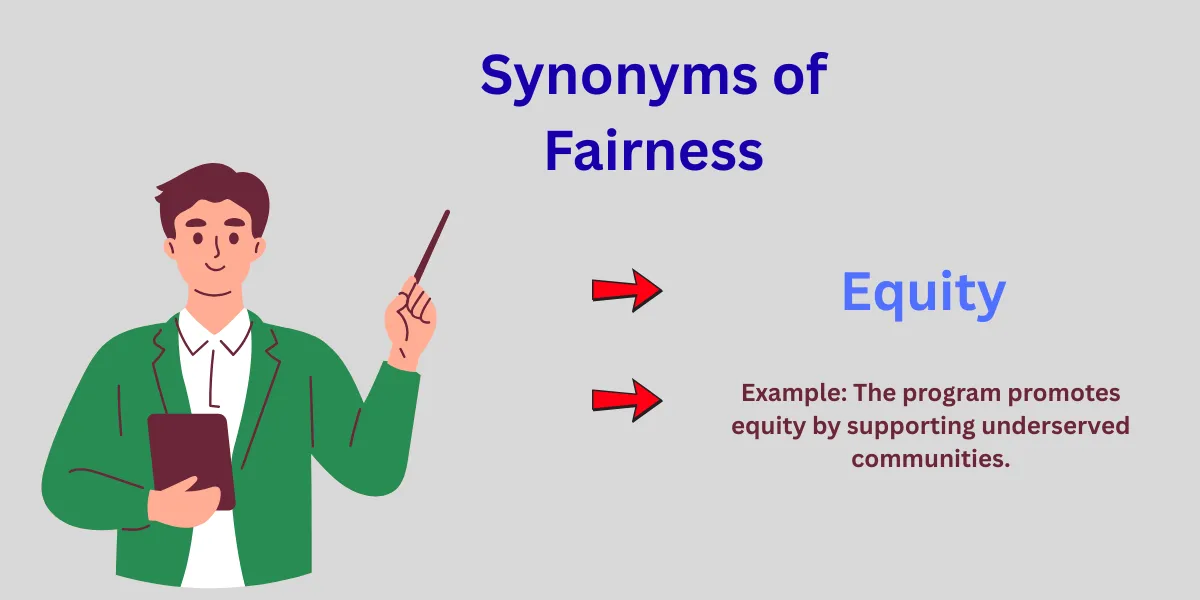
2. Equity
- Description: Fairness, especially in distributing resources or opportunities.
- Example: The program promotes equity by supporting underserved communities.
- When to Use: Ideal in discussions of fairness in economics or social policies.
3. Impartiality
- Description: Being unbiased and neutral.
- Example: The judge’s impartiality was never questioned.
- When to Use: When emphasizing no personal bias or favoritism.
4. Objectivity
- Description: Judging based on facts, not feelings.
- Example: Objectivity is crucial in scientific research.
- When to Use: In analytical or professional settings.
5. Evenhandedness
- Description: Treating all sides equally.
- Example: The manager was praised for her evenhandedness during the dispute.
- When to Use: When describing balanced treatment in conflicts or negotiations.
6. Neutrality
- Description: Staying neutral, not taking sides.
- Example: The mediator maintained neutrality throughout the process.
- When to Use: When stressing avoidance of partiality or involvement.
7. Balance
- Description: Giving equal consideration to all parts.
- Example: A balanced viewpoint is necessary to understand the issue fully.
- When to Use: In discussions involving weighing pros and cons.
8. Decency
- Description: Fairness coupled with kindness and respect.
- Example: Treating others with decency is important in any workplace.
- When to Use: When emphasizing fairness with a moral or humane touch.
9. Honesty
- Description: Being truthful and fair without deception.
- Example: Honesty in dealings builds trust.
- When to Use: When highlighting truthfulness alongside fairness.
10. Rightfulness
- Description: Being morally or legally correct.
- Example: The rightfulness of the claim was confirmed by evidence.
- When to Use: In moral or ethical contexts.
11. Legitimacy
- Description: Conforming to rules or laws; rightful.
- Example: The legitimacy of the election was verified by observers.
- When to Use: When emphasizing legal or formal acceptance.
12. Righteousness
- Description: Morally right or just.
- Example: He fought with righteousness to defend the weak.
- When to Use: In religious or moral discussions.
13. Equitableness
- Description: Quality of being fair and just.
- Example: The equitableness of the decision impressed everyone.
- When to Use: Formal settings where fairness is analyzed carefully.
14. Justness
- Description: The quality of being just or fair.
- Example: The justness of her argument convinced the panel.
- When to Use: When focusing on the correctness of an action or decision.
15. Fair-mindedness
- Description: Having a fair and unbiased attitude.
- Example: His fair-mindedness made him a respected leader.
- When to Use: When highlighting personality traits.
Crush isn’t replying? Try these lines from flirtsling.com they’re cute, bold, and impossible to ignore!
16. Dispassionateness
- Description: Lack of emotional involvement; impartial.
- Example: A judge must show dispassionateness to rule fairly.
- When to Use: In legal or professional contexts needing emotional detachment.
17. Reasonableness
- Description: Being fair, sensible, and moderate.
- Example: The reasonableness of her request made it easy to approve.
- When to Use: Everyday use when emphasizing sensible fairness.
18. Transparency
- Description: Openness and clarity in actions.
- Example: Transparency in government builds public trust.
- When to Use: In business or governance contexts emphasizing openness.
19. Evenness
- Description: Uniformity or consistency in treatment.
- Example: His evenness in grading was appreciated by students.
- When to Use: When focusing on consistent fairness.
20. Decorum
- Description: Proper behavior, sometimes linked with fairness.
- Example: She maintained decorum even during heated discussions.
- When to Use: Social or formal situations.
Looking for better ways to say it? Visit Repliesnest.com for smarter, clearer alternatives to everyday phrases!
21. Equality
- Description: Being equal in status, rights, and opportunities.
- Example: Equality is a fundamental principle of democracy.
- When to Use: When emphasizing identical treatment and rights.
22. Equanimity
- Description: Mental calmness, especially in difficult situations.
- Example: He faced criticism with equanimity and fairness.
- When to Use: To stress calm and balanced fairness under pressure.
23. Objectiveness
- Description: Synonymous with objectivity; focus on facts.
- Example: Objectiveness is key in investigative journalism.
- When to Use: Same as objectivity, interchangeable.
24. Equilibrium
- Description: A state of balance or fairness.
- Example: The system maintained an equilibrium between competing interests.
- When to Use: When referring to stability and fairness combined.
25. Decisiveness
- Description: The ability to make fair decisions promptly.
- Example: Her decisiveness ensured fairness in the hiring process.
- When to Use: When emphasizing the act of fair decision-making.
26. Propriety
- Description: Conforming to accepted standards of fairness or behavior.
- Example: He questioned the propriety of the contract terms.
- When to Use: Formal contexts emphasizing social or ethical correctness.
27. Impartialness
- Description: Being impartial; free from bias.
- Example: Impartialness is essential in jury duty.
- When to Use: Synonym for impartiality; use interchangeably.
28. Good faith
- Description: Acting with honest intent and fairness.
- Example: The contract was signed in good faith.
- When to Use: Legal or business contexts stressing honest intentions.
29. Nonpartisanship
- Description: Not supporting any side or party.
- Example: The organization prides itself on nonpartisanship.
- When to Use: Political or organizational contexts.
30. Fair play
- Description: Adhering to rules and ethical behavior.
- Example: Fair play is crucial in sportsmanship.
- When to Use: Informal or sports contexts.
How to Choose the Right Synonym of Fairness?
Choosing the right synonym depends on:
- Context: Legal, social, emotional, or professional settings may require different words.
- Tone: Formal (e.g., impartiality, equity), informal (fair play, decency), or moral (righteousness, justice).
- Emotional nuance: Some words imply kindness (decency), others strict neutrality (impartiality), or legal correctness (legitimacy).
- Cultural sensitivity: Some cultures might favor terms emphasizing harmony (equanimity) over conflict (justice).
For example, if writing a legal article, justice or impartiality works best. For everyday kindness, choose decency or fair-mindedness.
Conclusion
Understanding the many synonyms of fairness gives your writing and speech more depth and clarity. Words like justice, equality, impartiality, and integrity help convey balance and moral rightness in different situations.
By choosing the right synonym, you can express fairness more precisely, whether you are telling a story, making a point, or describing a real-life scenario.
Using these words thoughtfully allows you to show understanding, empathy, and respect in every context, making your message resonate even stronger with your audience.