Synonyms of hiatus, such as pause, break, and interruption, capture the different ways we describe a gap or stop in progress. For example, pause suggests a short stop with the expectation of continuing, while break feels more casual and flexible. If you’ve ever wondered about other words for hiatus, the choice often depends on tone—formal, casual, or creative.
These synonyms not only make your writing more precise but also help you set the right mood. From workplace communication to academic writing or even storytelling, the words you choose can signal anything from a brief pause to a major disruption.
What Does Hiatus Mean?
A hiatus is a gap, break, or interruption in continuity. It can describe time off from work, a season break in a TV show, or even a pause in speech or writing. The word comes from the Latin hiatus, meaning “opening” or “gap.”
Depending on context, the word hiatus can suggest:
- Rest – taking a break to recharge.
- Disruption – an unplanned stop in progress.
- Transition – a pause before starting again.
- Absence – something missing for a period of time.
Synonyms of Hiatus (With Meanings, Usage, and Examples)
1. Break
- Meaning: A general pause from activity.
- When to Use: Everyday contexts, casual tone.
- Example: “She took a break from studying to clear her mind.”
2. Pause
- Meaning: A temporary stop in progress.
- When to Use: Neutral, works in both formal and informal settings.
- Example: “The speaker paused before answering the tough question.”
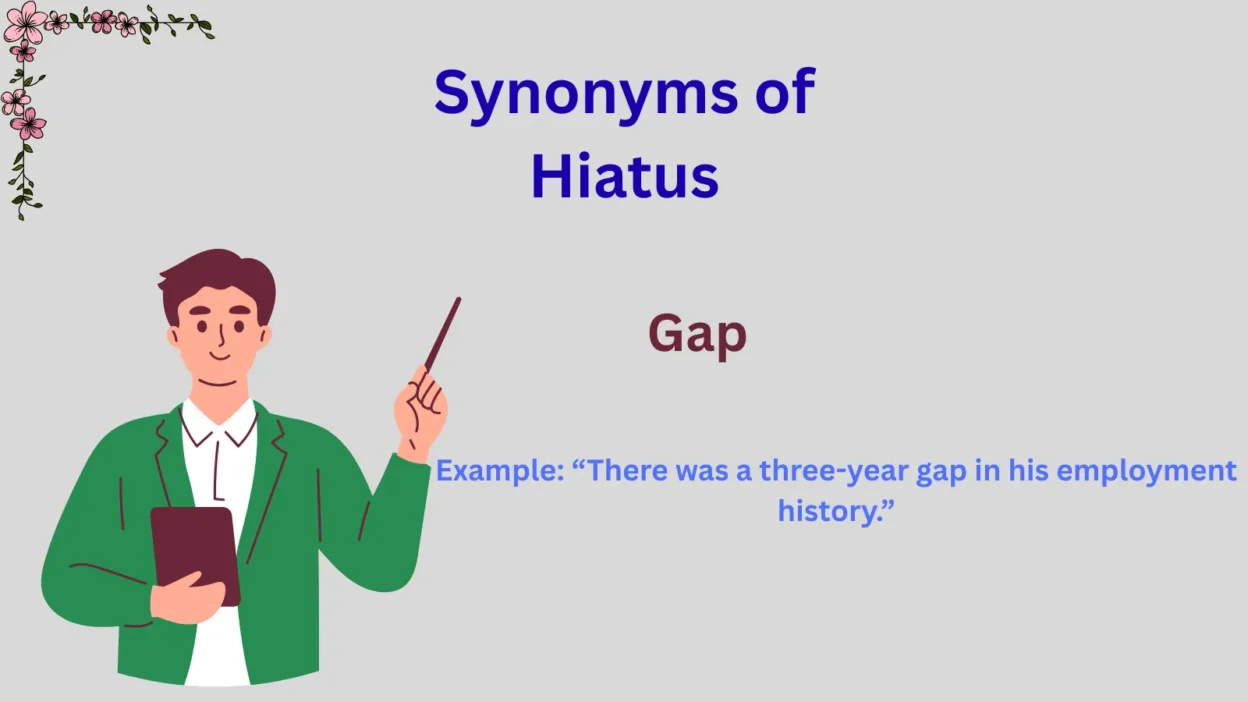
3. Gap
- Meaning: A space or interval where something is missing.
- When to Use: Best for describing interruptions in schedules, time, or knowledge.
- Example: “There was a three-year gap in his employment history.”
4. Interruption
- Meaning: A break in continuity caused by an external factor.
- When to Use: When the pause is disruptive.
- Example: “Their conversation faced constant interruptions from phone calls.”
5. Lull
- Meaning: A quiet period of inactivity.
- When to Use: Calm, peaceful breaks in activity.
- Example: “There was a lull in the crowd’s excitement after the opening act.”
6. Interval
- Meaning: A space of time between two events.
- When to Use: More formal, often in music, theater, or academic contexts.
- Example: “The performance resumed after a 15-minute interval.”
7. Suspension
- Meaning: A temporary stop, often enforced.
- When to Use: Legal, business, or disciplinary settings.
- Example: “The employee faced a suspension for misconduct.”
8. Intermission
- Meaning: A pause, especially in performances.
- When to Use: Entertainment, theater, or events.
- Example: “The audience stretched during the play’s intermission.”
9. Respite
- Meaning: A short period of relief from difficulty.
- When to Use: Emotional or physical relief contexts.
- Example: “The rain provided a welcome respite from the heat.”
10. Time-out
- Meaning: A deliberate pause or break, often disciplinary.
- When to Use: Parenting, sports, casual usage.
- Example: “The coach called a time-out to regroup the players.”
11. Sabbatical
- Meaning: An extended break, often for personal or professional growth.
- When to Use: Academic, corporate, or personal renewal.
- Example: “She took a sabbatical to travel and work on her novel.”
12. Moratorium
- Meaning: An official temporary halt to an activity.
- When to Use: Legal, political, or business contexts.
- Example: “The city announced a moratorium on new construction permits.”
13. Recess
- Meaning: A break from formal proceedings.
- When to Use: Courts, schools, or politics.
- Example: “The judge called for a short recess.”
14. Downtime
- Meaning: A period of inactivity, often due to rest or technical issues.
- When to Use: Technology, work, or leisure contexts.
- Example: “The server experienced unexpected downtime.”
15. Abeyance
- Meaning: A temporary state of suspension.
- When to Use: Formal, legal, or business settings.
- Example: “The project was held in abeyance until further notice.”
16. Break in Action
- Meaning: A pause in ongoing activity.
- When to Use: Sports, casual commentary.
- Example: “There was a break in action after the foul.”
17. Layoff
- Meaning: Temporary suspension of employment.
- When to Use: Workforce, business discussions.
- Example: “The company announced a temporary layoff.”
18. Discontinuity
- Meaning: A lack of continuous flow.
- When to Use: Academic, scientific, or technical writing.
- Example: “There was a discontinuity in the geological formation.”
19. Stoppage
- Meaning: A complete halt of activity.
- When to Use: Labor strikes, industry, or machinery.
- Example: “The workers organized a stoppage until demands were met.”
20. Cessation
- Meaning: An official or complete stop.
- When to Use: Legal, medical, or formal contexts.
- Example: “The treaty called for a cessation of hostilities.”
21. Break-off
- Meaning: A sudden pause or end.
- When to Use: Negotiations, relationships, or deals.
- Example: “Talks ended after the unexpected break-off.”
22. Standstill
- Meaning: Complete stop with no progress.
- When to Use: Traffic, negotiations, projects.
- Example: “The city came to a standstill during the storm.”
23. Disruption
- Meaning: A forceful interruption.
- When to Use: Negative, chaotic contexts.
- Example: “The strike caused major disruptions in public transport.”
24. Lapse
- Meaning: A temporary decline or gap.
- When to Use: Behavior, memory, time.
- Example: “He apologized for his lapse in judgment.”
25. Detour
- Meaning: A change in planned course.
- When to Use: Literal or figurative diversions.
- Example: “Their career took a brief detour before success.”
26. Void
- Meaning: An empty gap or absence.
- When to Use: Emotional, abstract, or literary writing.
- Example: “Her absence left a void in his life.”
27. Interlude
- Meaning: A short period between main events.
- When to Use: Artistic, poetic, or reflective contexts.
- Example: “The calm interlude was broken by sudden laughter.”
28. Breakaway
- Meaning: A separation or pause from something established.
- When to Use: Sports, politics, or personal independence.
- Example: “The group made a breakaway from tradition.”
29. Deferral
- Meaning: A postponement or delay.
- When to Use: Formal, academic, or financial contexts.
- Example: “The student requested a deferral of admission.”
30. Hold
- Meaning: A temporary stop in progress.
- When to Use: Practical, everyday or business contexts.
- Example: “The plan is currently on hold pending approval.”
How to Choose the Right Synonym
The best synonym for hiatus depends on tone, context, and emotional nuance:
- Casual contexts: Use “break” or “pause.”
- Formal or professional contexts: Choose “moratorium,” “suspension,” or “abeyance.”
- Emotional or reflective tone: Opt for “respite,” “lull,” or “void.”
- Artistic or poetic writing: Go with “interlude” or “detour.”
- Workplace or academic use: “Sabbatical,” “recess,” or “deferral” work best.
Cultural nuances also matter: for example, “time-out” resonates strongly in American parenting and sports culture, while “sabbatical” is deeply tied to academia.
Conclusion
The word hiatus captures a pause with an expectation of return, but depending on your context, tone, and purpose, a synonym might be more effective. From the casual break to the formal moratorium to the reflective respite, each alternative carries subtle shades of meaning.
By understanding these nuances, you can select the most fitting hiatus synonym and strengthen your communication—whether in casual conversation, professional writing, or creative expression.
Mastering these choices makes your writing not only more precise but also more impactful.