Synonyms of rhyme scheme, such as poetic pattern, verse structure, and sound arrangement, highlight the creative, structural, and musical aspects of poetry. For example, “poetic pattern” points to the artistic flow of rhymes, while “verse structure” emphasizes the technical side of how lines are organized. These terms capture different perspectives on rhyme schemes, from the rules of classical poetry to the rhythm of modern song lyrics.
If you’re writing about sonnets, rap lyrics, or free verse, using the right synonym helps set the tone. In this guide, we’ll explore a variety of ways to refer to rhyme schemes and when each is most appropriate.
These synonyms of rhyme scheme not only enrich your writing but also deepen your understanding of poetry’s beauty. From traditional forms to experimental styles, the language of rhyme is as versatile as the art itself.
What Does Rhyme Scheme Mean?
A rhyme scheme is the ordered pattern of rhymes at the end of each line of a poem or song. Often described using letters (like ABAB or AABB), it helps create rhythm, structure, and musicality. This concept has roots in ancient oral traditions, where rhyme made storytelling easier to remember and more engaging.
Depending on how you use the word, a rhyme scheme can evoke:
- Musical flow
- Structural order
- Creative artistry
- Memorability in performance
30 Synonyms of Rhyme Scheme with Descriptions and Examples
Here’s a friendly glossary of alternatives to rhyme scheme. Each comes with a quick explanation, an example sentence, and tips on when it’s best used.
1. Rhyme Pattern
Description: A general term for any recurring rhyme structure.
Example: The rhyme pattern of this sonnet is ABAB.
Use when: You want something simple and clear without being too technical.
2. Rhyme Structure
Description: Focuses on the organization of rhymes in a poem.
Example: The poem’s rhyme structure adds a soothing rhythm.
Use when: Discussing formal aspects of poetry or music composition.
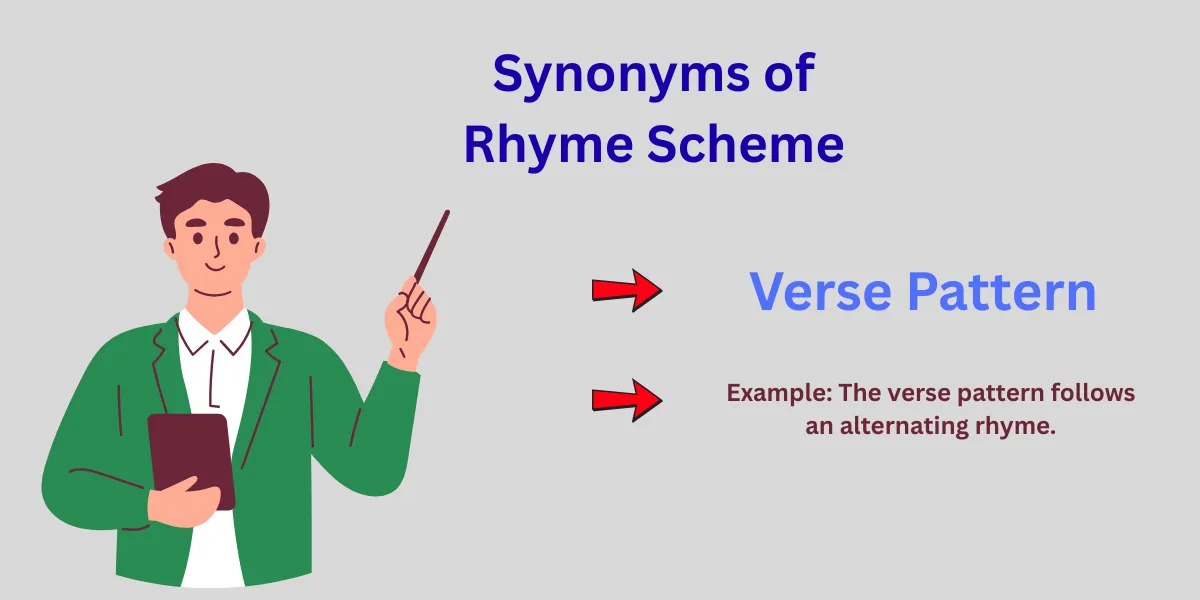
3. Verse Pattern
Description: Highlights the arrangement of verses, including rhyme.
Example: The verse pattern follows an alternating rhyme.
Use when: Referring to both rhyme and meter in a poetic context.
4. Rhyme Arrangement
Description: Emphasizes the deliberate placement of rhymes.
Example: The rhyme arrangement here feels playful and light.
Use when: You want to focus on the creative choice behind rhyme placement.
5. Rhyming Scheme
Description: A slightly less common phrase, interchangeable with rhyme scheme.
Example: The rhyming scheme is consistent throughout the poem.
Use when: You want a synonym that sounds a bit more formal.
6. Rhyme Layout
Description: Visualizes the rhyme pattern as a layout or design.
Example: The rhyme layout helps the poem flow smoothly.
Use when: Talking about the visual or structural aspect of poetry.
7. Rhyme Format
Description: Implies a fixed or formalized rhyme arrangement.
Example: The rhyme format follows the traditional sonnet style.
Use when: Writing academically or discussing poetic forms.
8. Poetic Pattern
Description: Broad term that includes rhyme, meter, and rhythm.
Example: The poetic pattern gives the poem its musicality.
Use when: Describing multiple elements beyond just rhyme.
9. Rhyme Order
Description: Focuses on the sequence in which rhymes appear.
Example: The rhyme order is irregular but effective.
Use when: Highlighting how rhyme placement affects reading.
10. Rhyme Arrangement
Description: The specific way rhymes are organized.
Example: The rhyme arrangement here is complex and elegant.
Use when: You want to stress the intentional design behind the rhymes.
11. End Rhyme Pattern
Description: Specifies rhyme occurring at the end of lines.
Example: The end rhyme pattern is ABAB in this poem.
Use when: Distinguishing from internal or slant rhymes.
12. Stanza Scheme
Description: Emphasizes rhyme within stanzas.
Example: The stanza scheme varies between quatrains and tercets.
Use when: Discussing rhyme as it relates to stanza structure.
13. Poetic Form
Description: A broader term that includes rhyme scheme and meter.
Example: The poetic form follows a traditional ballad structure.
Use when: Referring to overall style and construction.
14. Rhyme Sequence
Description: Focus on the order of rhymes throughout the poem.
Example: The rhyme sequence alternates smoothly between sounds.
Use when: Discussing progression and flow of rhyme.
15. Rhythmic Scheme
Description: Combines rhyme and rhythm patterns.
Example: The rhythmic scheme complements the rhyme scheme perfectly.
Use when: Talking about musicality in poetry.
16. Poem’s Cadence
Description: Refers to the flow and beat created by rhyme and rhythm.
Example: The poem’s cadence feels gentle and natural.
Use when: Highlighting emotional or auditory effect.
17. Rhyming Pattern
Description: Focuses on the pattern of rhyme sounds.
Example: The rhyming pattern repeats every two lines.
Use when: Informal discussions about rhyme.
18. Sound Scheme
Description: Includes rhyme and other sound devices.
Example: The sound scheme enhances the poem’s musical quality.
Use when: Talking about phonetic elements broadly.
19. Rhyme Scheme Blueprint
Description: Suggests a planned, architectural aspect.
Example: The rhyme scheme blueprint guides the poem’s structure.
Use when: Emphasizing careful design.
20. Lyric Pattern
Description: Often used in songs, focusing on rhyme and rhythm.
Example: The lyric pattern makes the chorus catchy.
Use when: Writing about song lyrics or musical poetry.
21. End-Word Pattern
Description: Focuses on the rhyme of end words.
Example: The end-word pattern is simple yet effective.
Use when: Distinguishing rhyme at line endings.
22. Rhyme Chart
Description: Visual representation of rhyme distribution.
Example: The rhyme chart reveals an alternating scheme.
Use when: Teaching or analyzing rhyme visually.
23. Verse Arrangement
Description: Highlights the placement of verses and rhyme.
Example: The verse arrangement supports the poem’s theme.
Use when: Discussing poetic structure broadly.
24. Rhyme Progression
Description: Shows how rhyme develops through a poem.
Example: The rhyme progression builds intensity.
Use when: Analyzing narrative or emotional flow.
25. Rhyme Sequence Plan
Description: Emphasizes a planned sequence of rhymes.
Example: The rhyme sequence plan is unconventional but effective.
Use when: Talking about composing poetry.
26. Poetic Layout
Description: The overall design of the poem, including rhyme.
Example: The poetic layout balances rhyme and meter.
Use when: Discussing visual and structural elements.
27. Rhyming Order
Description: Highlights the order in which rhymes appear.
Example: The rhyming order creates a hypnotic effect.
Use when: Describing effect and arrangement.
28. Stanza Pattern
Description: Refers to rhyme within stanzas specifically.
Example: The stanza pattern alternates every four lines.
Use when: Focusing on stanza-based rhyme.
29. Rhyme Cycle
Description: Suggests recurring rhyme motifs.
Example: The rhyme cycle repeats throughout the poem.
Use when: Describing repeating rhyme motifs.
30. End Rhyme Layout
Description: Focus on the layout of end rhymes.
Example: The end rhyme layout is simple but charming.
Use when: Highlighting rhyme placement at line ends.
How to Choose the Right Synonym
Choosing the best synonym depends on:
- Tone: Want something formal? Try “rhyme structure” or “poetic form.” For casual chats, “rhyme pattern” or “rhyming scheme” works great.
- Context: Academic papers lean toward “rhyme format” or “poetic form,” while songwriting discussions favor “lyric pattern” or “rhyme progression.”
- Emotional nuance: If you want to highlight flow and mood, “poem’s cadence” or “rhythmic scheme” fit well. For visual focus, “rhyme chart” or “poetic layout” is ideal.
- Cultural usage: In music and songwriting, “lyric pattern” or “rhyme progression” are common, whereas literary critics often use “rhyme structure” or “poetic form.”
Conclusion
Synonyms of rhyme scheme give us more than new words. They show fresh ways to talk about rhythm and design in poetry. Words like “poetic pattern,” “verse structure,” and “sound arrangement” each shine with a special meaning. They help writers explain poems with ease and help readers feel the music in the lines.
In the end, all these words point to the same truth. Rhyme schemes bring order, beauty, and sound to language. Use these synonyms to add color to your work.
Let them guide your words and make your writing sing. They make hard ideas simple. They also make poetry feel alive and full of joy.